
If you’ve scrolled through Instagram or TikTok lately, you may have noticed people rolling gently on a mat, breathing slowly, and moving nothing like the sweaty, fast-paced yoga flows you’re used to seeing. That’s somatic yoga, and it’s become one of the most searched wellness terms in the last couple of years. Maybe a friend mentioned it to you, or maybe your usual workout leaves your body tired but somehow still tense. Either way, you’re probably wondering what somatic yoga actually is, how it’s different from the yoga you already know, and whether it’s worth trying.
This guide walks through what somatic yoga means, where the practice comes from, how a typical class works, who tends to benefit from it, and how to start safely.
What Does “Somatic” Actually Mean?
The word “somatic” comes from the Greek word soma, meaning “the living body.” In movement and wellness contexts, somatic refers to experiencing the body from the inside rather than judging it from the outside.
Think about the difference between checking a yoga pose in a mirror versus closing your eyes and noticing how your hips actually feel as you move into it. The mirror view is external. The felt sense of tightness, ease, or effort is somatic. This distinction matters because it shapes the entire approach somatic yoga takes to movement.
So, What Is Somatic Yoga?
Somatic yoga blends traditional yoga postures and breathing with principles from a broader movement field called somatics. Rather than flowing quickly between poses or holding a shape for a set number of breaths, somatic yoga slows everything down. Movements are small, deliberate, and repeated, with the goal of noticing sensation rather than achieving a particular shape.
It’s worth knowing that somatic yoga isn’t a formally standardized lineage the way Ashtanga or Bikram yoga are. There’s no single certifying body defining exactly what counts. Instead, it’s better understood as an approach or a lens that different teachers apply to yoga, usually with common threads: slow movement, attention to internal sensation, breath awareness, and an emphasis on releasing habitual muscle tension rather than building strength or flexibility for its own sake.
A Quick Look at Where Somatic Yoga Comes From
The roots of somatic yoga trace back to the wider field of somatics, which movement theorist Thomas Hanna helped develop in the 1970s. Hanna built on earlier work by physicist and movement educator Moshé Feldenkrais, whose method focused on retraining the nervous system through slow, mindful movement rather than repetitive exercise.
Over time, yoga teachers began combining these somatic principles with familiar yoga poses and breathing techniques, and “somatic yoga” as most people use the term today grew out of that blending. It has picked up considerable attention recently, partly through wellness content on social media and partly because it fits a broader shift toward slower, more mindful approaches to fitness.
Somatic Yoga vs. Vinyasa, Power, and Yin Yoga
It helps to see somatic yoga next to styles you may already know.
| Style | Pace | Main Focus | Typical Feel |
|---|---|---|---|
| Vinyasa / Power Yoga | Fast, flowing | Strength, cardio, coordinated breath-to-movement | Energizing, sweaty, physically demanding |
| Yin Yoga | Slow, still | Passive stretching, holding poses for minutes at a time | Deep stretch, quiet, sometimes intense on joints |
| Somatic Yoga | Slow, exploratory | Internal sensation, nervous system regulation | Gentle, curious, often unfamiliar at first |
The easiest mix-up is between somatic and yin yoga, since both move slowly. The difference is that yin yoga is largely passive — you sink into a stretch and hold it. Somatic yoga is active but slow: you’re continuously moving in small ways, often lying down, exploring a range of motion rather than holding a static position.
What Actually Happens in a Somatic Yoga Class
A typical somatic yoga session looks quite different from a standard vinyasa class, and knowing this ahead of time helps you know what you’re walking into.
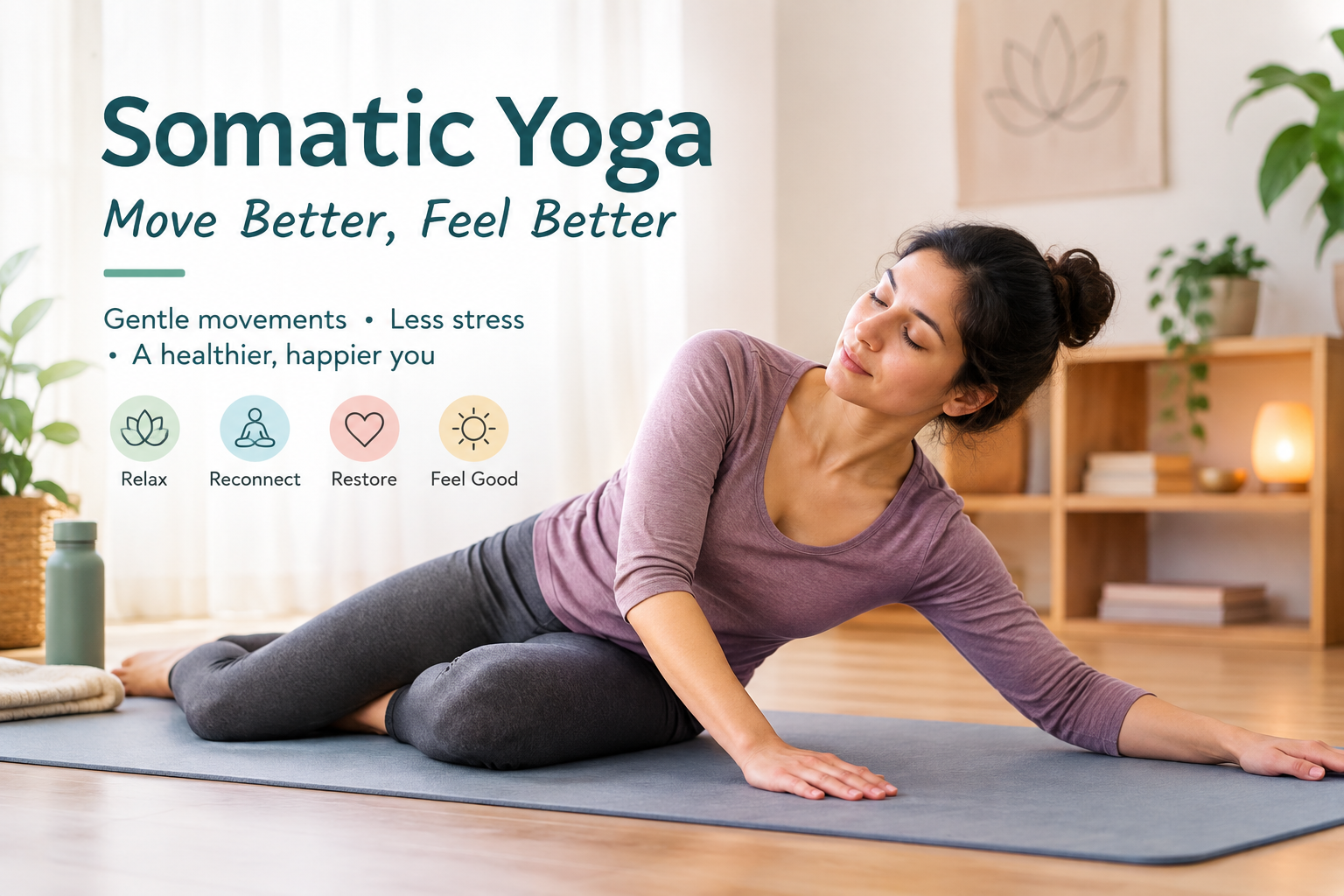
Most classes begin with settling in, often lying on your back, and simply noticing how your body feels without trying to change anything yet. From there, the teacher usually guides small, slow movements — things like gently rocking the pelvis, slowly rolling the head side to side, or contracting and then consciously releasing a muscle group. This slow contract-and-release pattern is a technique borrowed directly from Hanna’s original somatics work, sometimes called pandiculation, and it’s meant to help the nervous system “reset” its baseline tension level in a muscle rather than just stretching it.
Props like bolsters, blankets, and straps are common, partly because much of the practice happens on the floor. Lighting tends to be soft, and there’s rarely music with a strong beat. Classes usually close with a period of stillness similar to savasana in traditional yoga.
If you’re used to a class that leaves you breathless, a somatic yoga session can feel almost too easy at first. That’s by design — the practice isn’t measuring itself by exertion.
Potential Benefits of Somatic Yoga
Somatic yoga hasn’t been studied as extensively as more established forms of yoga, so it’s worth being cautious about overstating what it can do. That said, based on how the practice works and what’s understood about similar slow, mindful movement approaches, people commonly report:
- A noticeable reduction in muscle tension, especially in areas like the neck, shoulders, and lower back
- Improved awareness of how stress or emotion shows up physically in the body
- A calmer nervous system state after a session, which may support better sleep or reduced anxiety over time
- Gradual improvements in mobility, since slow, exploratory movement can help release habitual tightness that stretching alone sometimes doesn’t reach
- A useful complement to more intense training, functioning as a form of active recovery
None of this means somatic yoga can treat or cure a medical condition, and it shouldn’t replace physical therapy or medical care where those are needed.
Who Tends to Benefit Most From Somatic Yoga
Somatic yoga tends to appeal to a fairly specific set of people, though it’s approachable for almost anyone willing to slow down. It’s often a good fit for:
- Beginners who find fast-paced yoga or HIIT-style classes intimidating
- People managing everyday stress, tension, or a busy, sedentary lifestyle
- Anyone recovering from an old injury who wants gentle movement, ideally alongside guidance from a physical therapist
- Athletes looking for an active recovery day between harder training sessions
- People who’ve tried more dynamic yoga styles but feel like something is missing from a purely physical approach
How to Get Started With Somatic Yoga
Getting started doesn’t require special equipment or a big time commitment.
- Find a beginner-friendly class. Look for studios offering “somatic yoga” or “somatic movement” specifically, or start with a reputable instructor’s videos online if in-person classes aren’t available near you.
- Set up a comfortable space. You’ll spend a lot of time on the floor, so a supportive mat, a folded blanket, and a firm pillow or bolster will make a real difference.
- Wear loose, comfortable clothing. Since the movements are small and internal, restrictive clothing can get in the way of noticing sensation clearly.
- Start with shorter sessions. Fifteen to twenty minutes is plenty for a first few tries. You can build up from there.
- Let go of the idea of “getting it right.” There’s no pose to perfect here. The goal is simply to notice how your body feels as you move.
Mistakes Beginners Often Make
A few habits tend to trip up people who are new to somatic yoga, usually because they’re carrying over expectations from more physical forms of exercise.
- Moving too quickly, out of habit, instead of slowing down enough to actually notice sensation
- Trying to make movements look a certain way rather than focusing on how they feel
- Comparing the session to a more intense workout and feeling like it “doesn’t count”
- Holding the breath during effortful moments instead of breathing naturally through them
- Pushing into discomfort or pain, rather than backing off the moment something feels wrong
How Often Should You Practice?
There’s no strict rule, but many people find two to four sessions a week to be a reasonable starting point, especially if sessions are short. Some people prefer a brief daily practice of ten to fifteen minutes instead. What matters more than frequency is consistency — a short, regular practice tends to be more useful than an occasional long one.
What to Expect, and When You Might Notice a Difference
Many people notice some sense of ease or relaxation immediately after a single session, simply from slowing down and breathing intentionally. Changes in chronic tension patterns or mobility tend to build more gradually, often over several weeks of regular practice, and results vary quite a bit from person to person depending on things like how much tension they’re carrying and how consistently they practice.
It’s reasonable to give somatic yoga a few weeks of regular practice before deciding whether it’s making a meaningful difference for you.
When to Check With a Doctor or Physical Therapist First
Somatic yoga is generally gentle, but that doesn’t mean it’s automatically appropriate for everyone. It’s worth talking to a doctor or physical therapist before starting if you:
- Have a recent injury or have had surgery
- Are managing a chronic pain condition
- Are pregnant
- Have a diagnosed medical condition where movement needs to be guided or restricted
A qualified professional can help you understand which movements are appropriate for your specific situation.
Final Thoughts
Somatic yoga isn’t about pushing harder or moving faster. It’s a slower, more internally focused practice built around noticing how your body actually feels, rather than how a pose looks. For people who feel constantly tense, disconnected from their body, or worn out by high-intensity workouts, it can be a useful and approachable addition to a wider movement routine. The best way to know if it’s right for you is to try a short beginner session and pay attention to how you feel afterward, rather than judging it by how much you sweat.
FAQs
Is somatic yoga good for beginners?
Yes. Because the movements are slow and low-impact, somatic yoga is often easier for beginners to start with than faster-paced yoga styles.
What’s the difference between somatic yoga and yin yoga?
Yin yoga involves passively holding stretches for several minutes. Somatic yoga involves continuous, slow, active movement rather than holding still.
Can somatic yoga help with anxiety or stress?
Many people find that slow, mindful movement helps them feel calmer, though somatic yoga isn’t a substitute for professional mental health support if you’re dealing with ongoing anxiety.
Do I need special equipment for somatic yoga?
No special equipment is required, though a supportive mat, a blanket, and a small pillow or bolster make floor-based movements more comfortable.
How is somatic yoga different from vinyasa yoga?
Vinyasa yoga is fast-paced and flows quickly between poses to build strength and cardio fitness. Somatic yoga is slow and internally focused, prioritizing sensation over athletic performance.
Can somatic yoga help with chronic pain?
Some people find gentle somatic movement helpful for managing tension-related discomfort, but anyone with a chronic pain condition should check with a doctor or physical therapist before starting.
How often should I practice somatic yoga?
Two to four sessions a week is a common starting point, though even a short daily practice of ten to fifteen minutes can be effective.